Back

Work

From Visa AIMS incident automation to NASA wind tunnels and CERN neutrino detection. Production systems at scale.

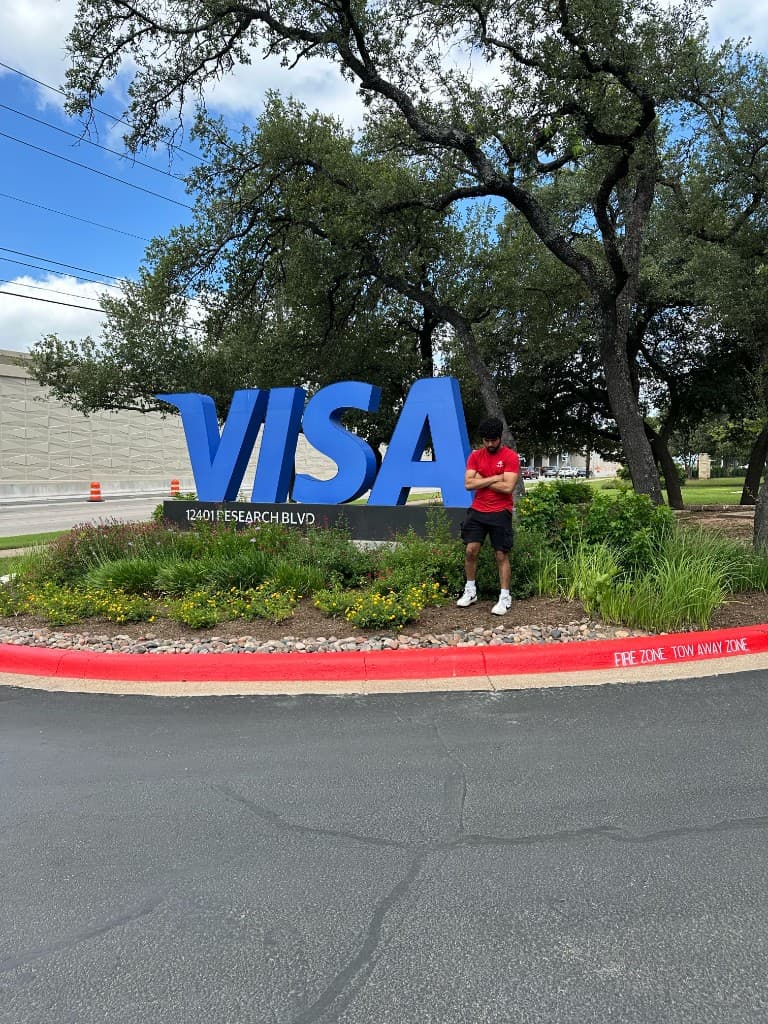
Dhruv Hegde at Visa, Austin
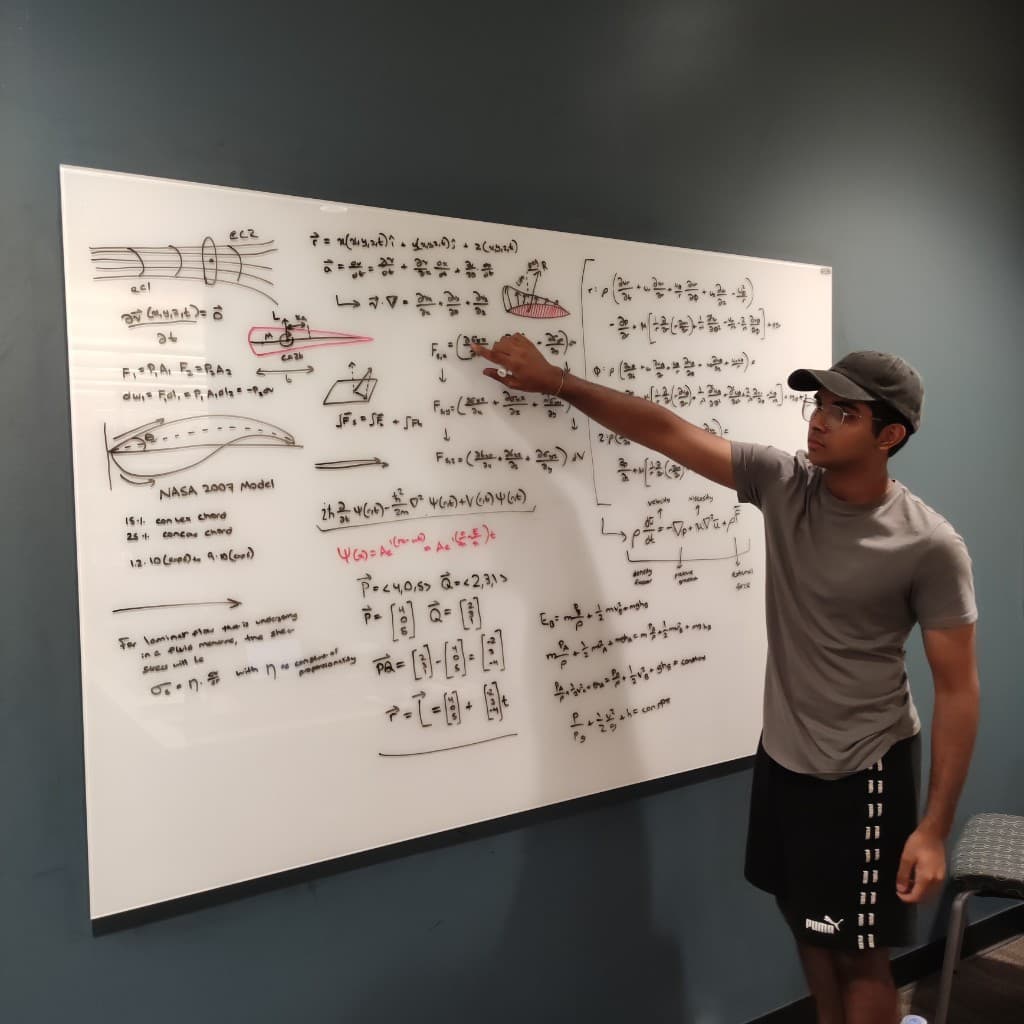
Dhruv Hegde at NASA, biomimetic aerodynamics
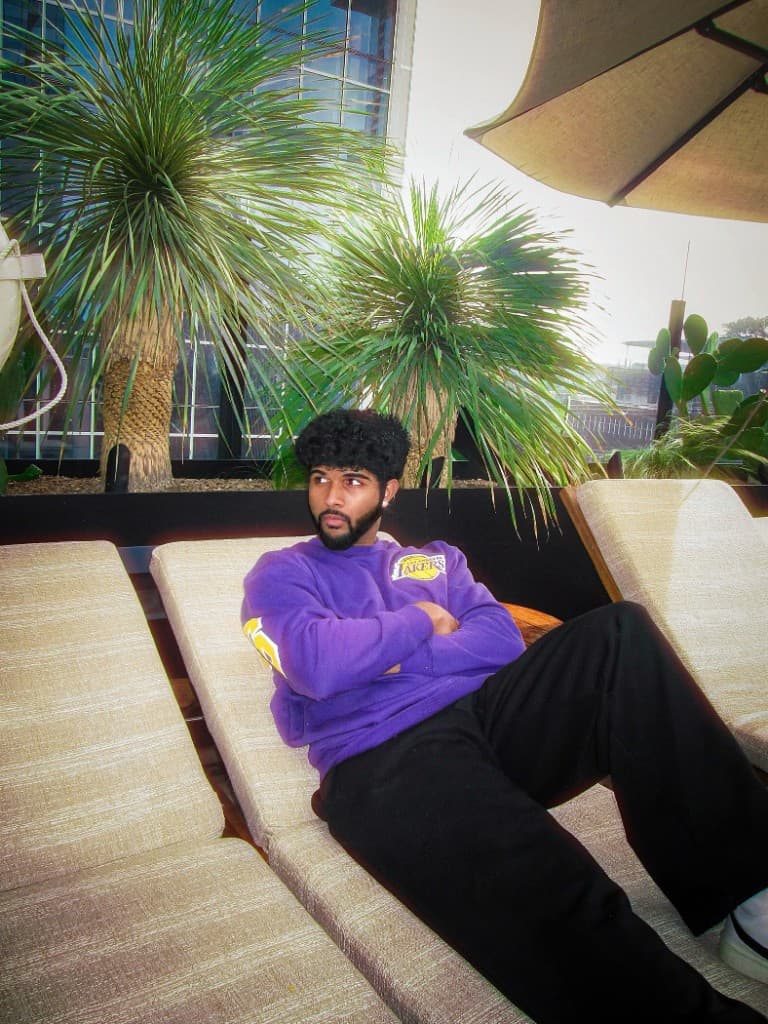
Dhruv Hegde, University of Michigan CS student, rooftop lounge portrait in Ann Arbor
Visa, Software Engineering Intern, AIMS

Visa

Current

May 2026 - Present · Austin, TX

Software Engineering Intern, AIMS

  • Architecting AIMS (Active Incident Management System) from greenfield on Visa's full-stack data pipeline and quantitative infrastructure team. The system replaces manual L2 escalation with proprietary routing logic, statistical and algorithmic escalation policies, AI technology triage, and real-time classification over production payment telemetry in the Visa data lake.
  • Designing high-throughput ingestion and enrichment pipelines across massive financial data lake volumes. The stack synthesizes autonomous knowledge graphs, remediation playbooks, and root-cause inference paths, then exposes web services so incident response can close the loop without waiting on a human queue.
  • Implementing production-grade stream processing with data lake access for real-time incident enrichment, anomaly correlation, and automated remediation workflows that run across payment infrastructure rather than in a sidecar demo environment.
  • Owning the classification and routing path end to end: feature extraction from telemetry, model-assisted triage for incident type, and deterministic fallbacks so a missed inference never drops a live payment incident.
  • Building the operator surface as a first-class product: queryable incident graphs, playbook execution traces, and audit-friendly decision logs so on-call engineers can inspect why AIMS routed a ticket the way it did.
TypeScriptPythonStream ProcessingData LakeML TriageKnowledge GraphsIncident Automation
NASA, Software Engineering Intern

NASA

Mar 2025 - Aug 2025 · Detroit, MI

Software Engineering Intern

  • Engineered simulation and control software for a 1:10 scale wind tunnel. Integrated PCB firmware, CAD, and CFD pipelines with object-oriented control loops, which improved biomimetic airfoil lift-to-drag ratio by 18% versus the baseline geometry.
  • Built a Python aerodynamic data science pipeline on NumPy, OpenCV, Pandas, and Matplotlib for particle image velocimetry (PIV) turbulence analysis. Vectorized preprocessing cut runtime substantially and produced AI-ready datasets with quality gates for model training and validation.
  • Authored three technical reports, including work featured in the AREN 2023 Annual Report, and presented the wind-tunnel and PIV results to 200+ researchers at the NASA GLOBE Symposium.
  • Closed the loop between hardware and software: embedded sensors on the scale model, logged runs into a reproducible pipeline, and fed CFD residuals back into the next geometry iteration instead of treating simulation and the tunnel as separate worlds.
  • Containerized the PIV workflow so later students and collaborators could regenerate the same ML-ready turbulence sets without reconstructing the toolchain by hand.
PythonC++MATLABOpenCVCFDPIVEmbeddedPCB

Princeton Plasma Physics Laboratory

Jun 2024 - Sep 2024 · Princeton, NJ

Software Engineering Intern

  • Implemented Background-Oriented Schlieren (BOS) imaging algorithms in Python and MATLAB, then applied PyTorch models that improved turbulence visualization accuracy by 35% against OpenCV / OpenPIV baselines.
  • Built an embedded control system (Arduino plus backend logging infrastructure) for artificial wavefront generation experiments, ingesting and timestamping 10,000+ frame sequences so later reconstruction stayed phase-aligned.
  • Co-authored two peer-reviewed publications on adaptive BOS imaging and wavelength-specific backgrounds, and filed a provisional patent for probabilistic aerospace flow visualization.
  • Wired wavelet transforms, Kalman filtering, and adaptive CLAHE into a real-time BOS path so edge detection, resolution, and noise all moved together instead of as three disconnected post-process steps.
  • Turned the imaging stack into a research instrument: calibration, background selection, and reconstruction were scriptable, so an experiment run produced a paper-ready field rather than a folder of raw frames.
PythonMATLABPyTorchOpenCVArduinoBOS Imaging

CERN, IceCube Neutrino Observatory

Sep 2023 - Jul 2024 · Remote

Software Engineering Intern

  • Implemented ML-based noise reduction algorithms in C++ for neutrino event detection on IceCube data, improving classification accuracy by 28% on held-out event samples.
  • Built automated calibration, video/audio processing, and data validation tooling for muon detectors that ingest 100GB+ daily, so bad runs fail closed instead of contaminating downstream physics analyses.
  • Optimized high-volume data pipelines for performance and numerical stability in distributed scientific computing environments, with attention to floating-point stability under long-running batch jobs.
  • Worked the full detector-to-classifier path: raw pulse series, calibration constants, feature tensors, and the C++ inference that had to stay fast enough for the observatory's daily data volume.
  • Added validation harnesses that compared reconstructed events against known calibration sources, catching drift in detector response before it showed up as a false physics signal.
C++Machine LearningDistributed SystemsIceCube

MineSync.ai

Oct 2025 - Jan 2026 · Ann Arbor, MI

Software Engineering Intern

  • Developed core Lifecycle Management workflows for mining fleet analytics in TypeScript, Next.js, Prisma, and tRPC, with tenant-isolation middleware so one operator's fleet graph never leaked into another's queries.
  • Implemented RAG-powered LLM retrieval over fleet documents and telemetry, then gated it behind granular RBAC so a dispatcher, a mechanic, and a site admin did not share the same retrieval surface.
  • Optimized API queries and React dashboard visualizations, cutting redundant network round-trips and bringing dashboard response latency down on the heaviest multi-tenant views.
  • Designed the filtering and pagination model around fleet-scale tables (assets, work orders, sensor ticks) so the UI stayed interactive without pulling a full tenant dump into the browser.
TypeScriptNext.jstRPCPrismaRAGRBAC

U-M Climate & Space Sciences

Jun 2024 - Dec 2024 · Ann Arbor, MI

Software Engineering Intern

  • Processed 10+ years of Ulysses spacecraft telemetry in MATLAB, R, XML, and Tecplot, then integrated the cleaned series with 3D magnetohydrodynamic (MHD) simulation models of the solar wind.
  • Developed automated data-cleaning and correlation pipelines that surfaced novel solar-wind pattern structures used in space-weather modeling rather than one-off notebook plots.
  • Produced reproducible research workflows with LaTeX reporting and simulation visualization so a later student could regenerate figures from the same telemetry extract.
  • Aligned in-situ Ulysses measurements against MHD grid outputs, which meant writing interpolation and time-alignment code that respected both spacecraft ephemeris and the simulation cadence.
MATLABRTecplotMHD SimulationSpace Weather